
A dietary supplement label may name a plant. But once the material has been ground and made into an extract, you cannot identify it by appearance. We therefore compare the sample's chemical composition with verified plant material used as a reference.
How we compare samples
We use high-performance liquid chromatography–mass spectrometry (HPLC–MS). The analysis produces a chemical profile: a pattern of signals that can be compared with a reference material. We are building a database of these profiles. It currently covers more than 35 species of medicinal plants used in Ukraine and continues to grow.
Example: nettle roots
We prepared an extract from a collected reference sample and compared it with two batches from suppliers. The three chromatograms were similar, and the corresponding mass spectrometry signals also matched.
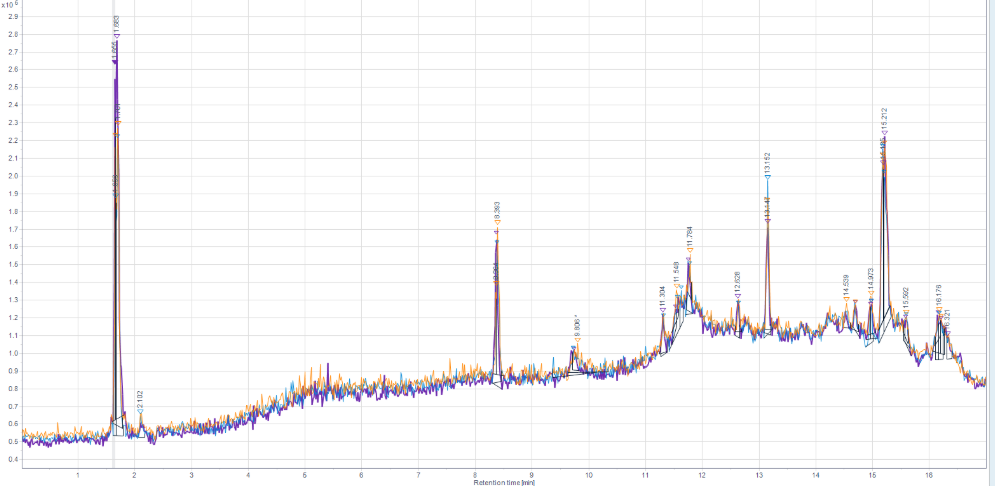
These results indicate that the tested batches are consistent with the chosen reference sample. This comparison can help check plant material before production.
Our next step is to expand the reference database and assess how well this approach works for complex extracts and finished dietary supplements, including mixtures of several plant extracts.