
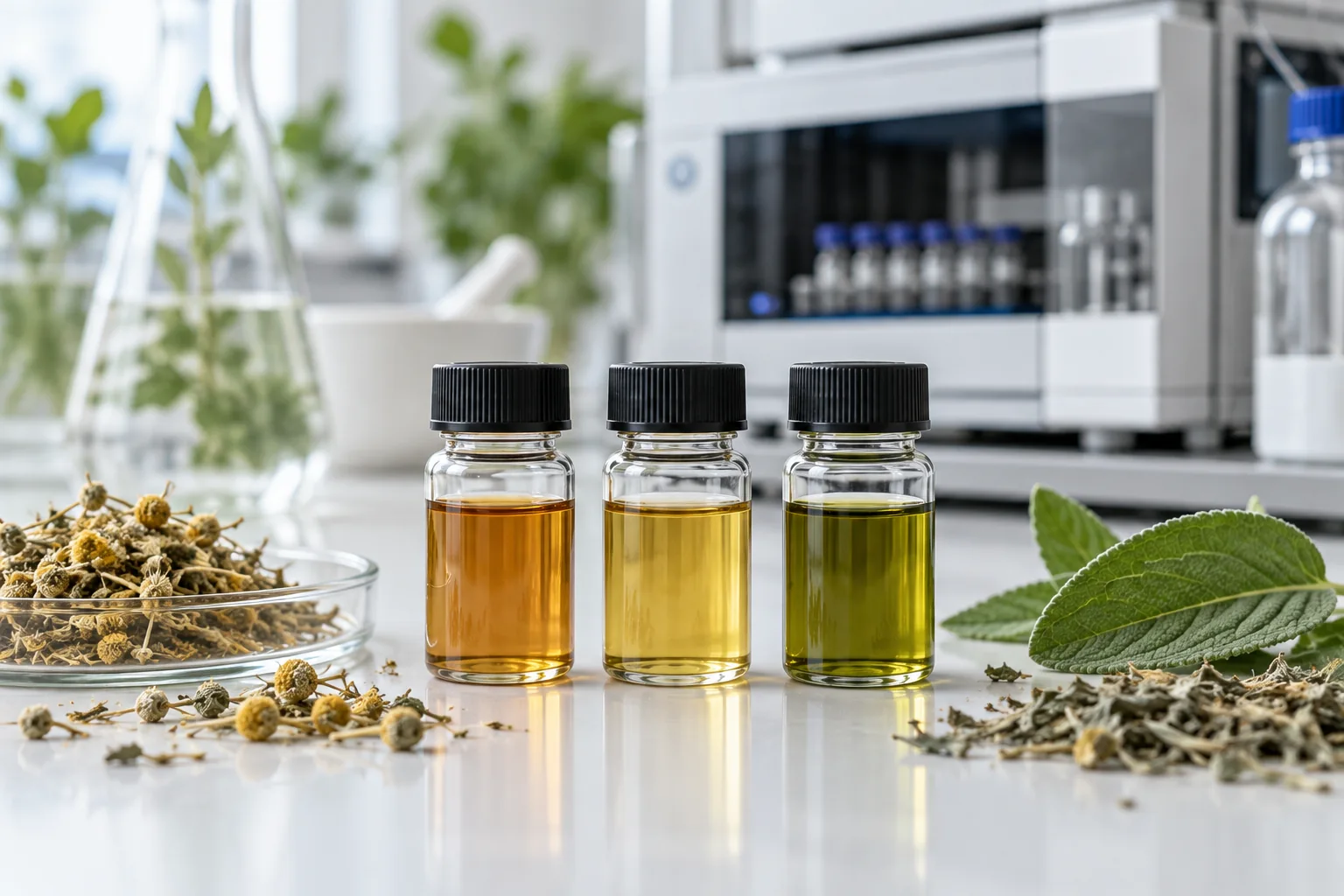
How can you tell whether a purchased extract is what you expect? One approach is to compare its chemical profile with that of a reference sample of the same plant.
What we compared
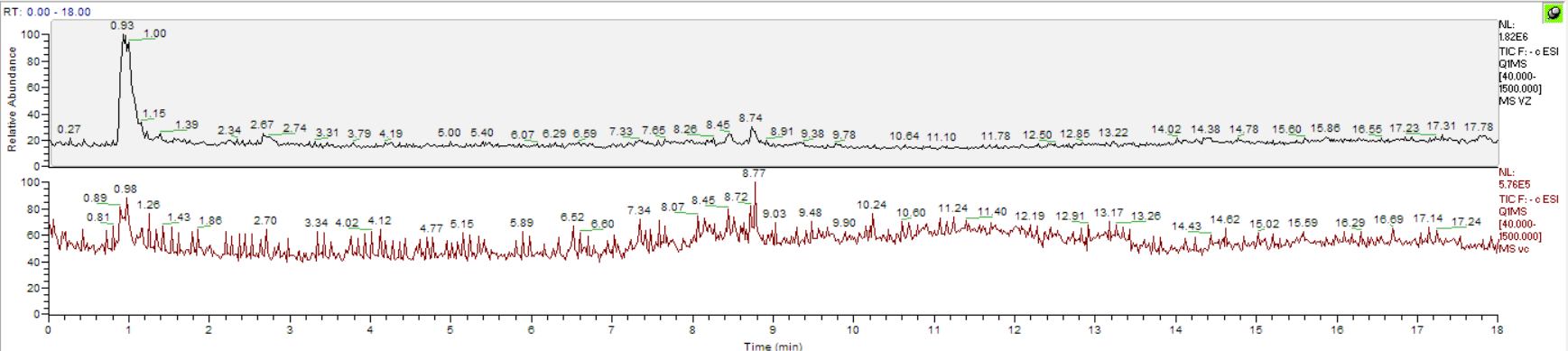
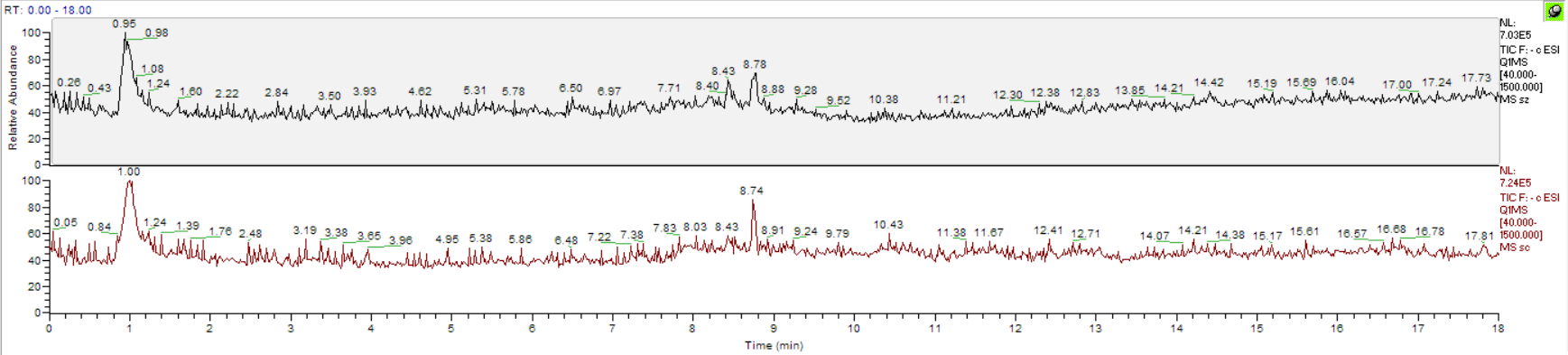
In our study, we compared three purchased dried plant extracts with valerian, knotgrass and hawthorn extracts that we prepared ourselves. We prepared all sample solutions in the same way and analyzed them by liquid chromatography–mass spectrometry (LC–MS).
What the chromatograms showed
| Plant | Observation | Conclusion from this comparison |
|---|---|---|
| Valerian | The purchased sample's chromatogram showed almost no peaks above the background signal. | Its profile differed substantially from the reference; the reason needs further investigation. |
| Knotgrass | The patterns of peaks were similar, but their intensities differed considerably. | Their compositions may have been similar, but the profiles were not identical. |
| Hawthorn | The peak patterns and mass spectra of the two samples were similar. | The profiles agreed well under the conditions of this comparison. |
Study chromatograms
Below are the original charts comparing the reference and purchased samples. On a narrow screen, scroll horizontally to view them.

What this means for a manufacturer
A chromatographic comparison can reveal when a batch of material differs from a reference sample. Before using it in a product, you may need to check its origin, how it was made or the levels of selected substances.
A difference between profiles alone does not prove that a plant was substituted, explain the cause or show that the sample is unsafe. Similar profiles do not replace full quality control either. Conclusions depend on the reference material, sample preparation and agreed assessment criteria.